
Teeth and gums
Active decay, gum inflammation and infections need to be assessed and, when indicated, treated.
Dental implants
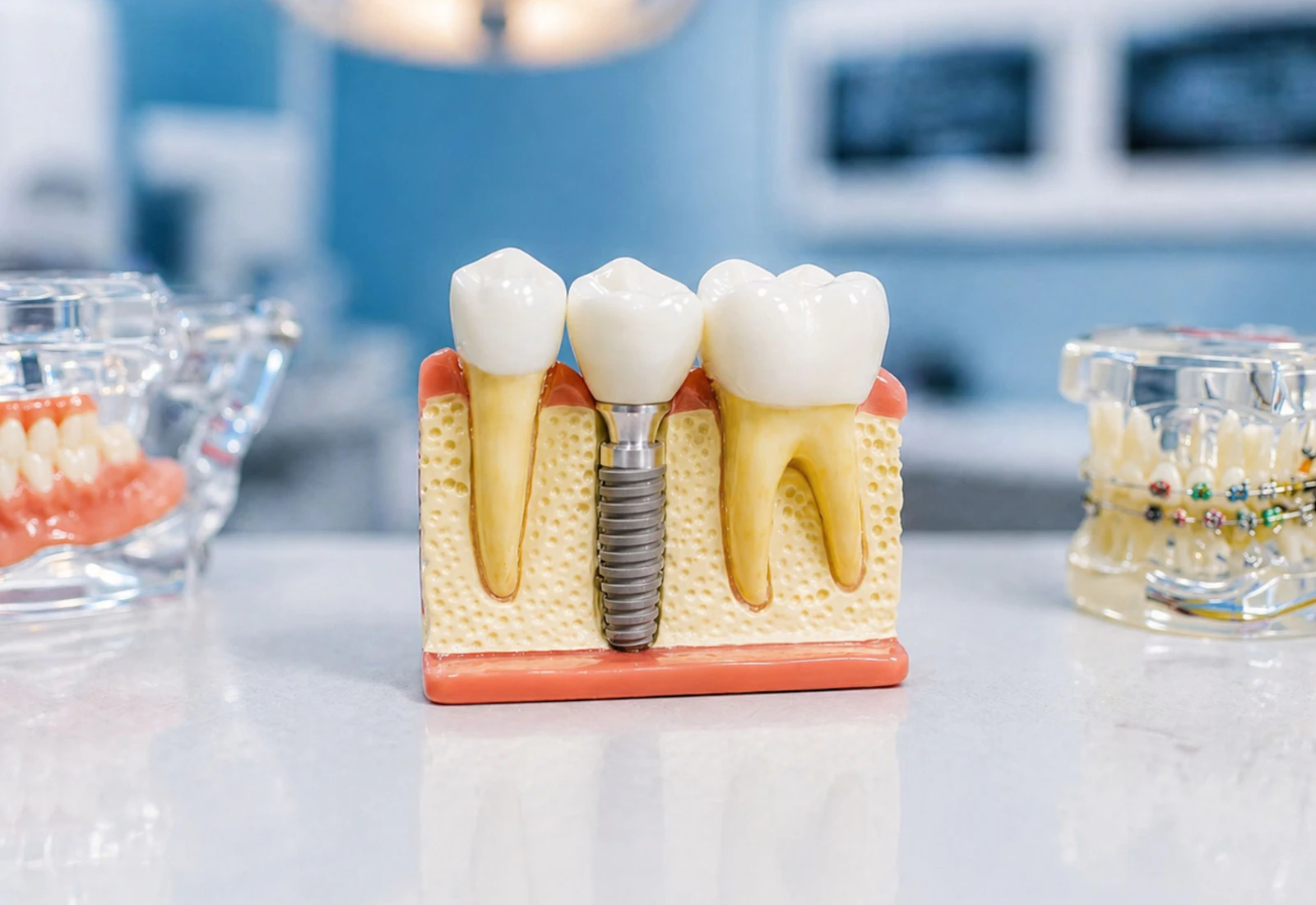
A dental implant is a component placed in the jawbone to support a crown, bridge or denture. It is one option for replacing missing teeth, but it is not suitable for every situation.
Assessment
Active decay, gum inflammation and infections need to be assessed and, when indicated, treated.
Examination and indicated imaging help assess the area where an implant may be placed.
Planning considers both the implant and the crown, bridge or denture it may support.
Health conditions, medication, smoking and oral hygiene may alter the recommendation or timing.
Alternatives
Depending on the situation, a bridge, partial or full denture, monitoring or postponing treatment may be discussed.
Stages
Your history is reviewed, your mouth examined and necessary tests recommended.
Preparatory care may be needed, and the implant is planned in relation to the future restoration.
Placement is carried out under local anaesthesia, followed by a healing period that varies individually.
The restoration is made after checks. Daily care and review visits remain necessary in the long term.
Risks and limitations
As with any surgical procedure, implant placement involves risks. These may include infection, bleeding, swelling, injury to nearby structures, healing problems or failure to integrate.
An implant is not a “tooth for life”, and an outcome cannot be guaranteed. The dentist explains the risks relevant to you before consent.
Medical note
The dentist determines diagnosis, suitability and an individual recommendation after a consultation and, when needed, diagnostic tests.
Your next step
Call us to request an appointment. If you do not know which type of consultation to choose, briefly explain the reason for your visit.
Your appointment is confirmed after the clinic gives you a date and time.